Reformas
How to Estimate a Bathroom Renovation (2026)
How to write a bathroom renovation estimate that wins jobs: all line items, 2026 US cost breakdown, example estimate, and how to send a client-ready PDF.
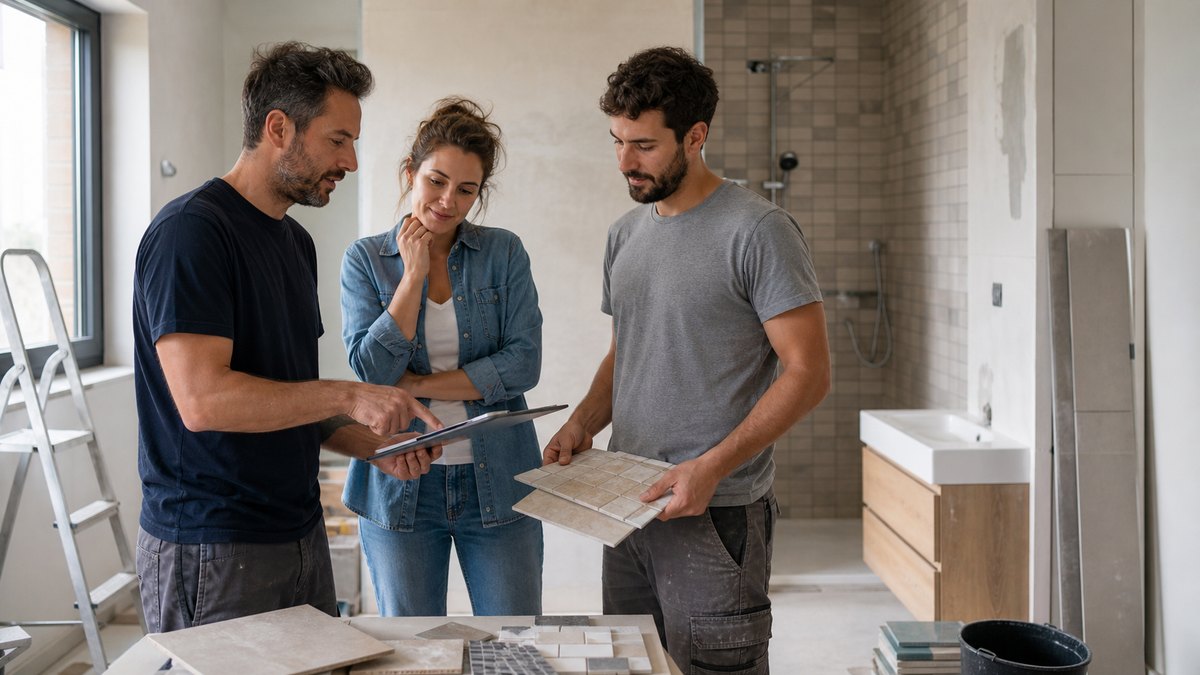
Bathroom renovations are complex estimates because they involve multiple trades — plumber, electrician, tile setter, and general contractor — often working the same small space in sequence. A vague quote will leave money on the table and create scope disputes. A detailed, chapter-by-chapter estimate protects you, sets expectations clearly, and gives clients confidence that you know exactly what you're doing.
How to scope a bathroom renovation on-site
Before writing a single number, spend 30–45 minutes in the bathroom answering these questions:
Plumbing assessment
- Is the existing drain location staying or moving? Moving drain lines is 3–5× more expensive than keeping them in place.
- What is the pipe material? Galvanized, cast iron, PVC, or copper all affect how new connections are made.
- Is there a crawlspace or basement below for access, or is it a slab floor? Slab access means saw-cutting concrete — add that to your estimate.
- Age and condition of shutoff valves.
Electrical assessment
- Are GFCI outlets already in place, or is the bathroom wired to old code?
- Is there a vent fan? Does it vent to the outside or just into the attic (not to code)?
- What's the lighting situation — one overhead fixture or multiple zones?
- Is the panel close by, or will new circuits be long runs?
Structural and waterproofing
- Is there any evidence of water damage behind the current tile or drywall?
- Is cement board or waterproof membrane in place, or will this need to be installed?
- Are there any soft spots in the subfloor?
Tile and surfaces
- Measure floor square footage, shower walls (linear feet × height), tub surround if applicable
- Count linear feet of tile trim/edge pieces
- Note the existing substrate — over how many layers of existing tile? (Most jurisdictions allow only two layers before full demo is required)
Complete bathroom renovation line items
1. Demolition and disposal
- Demo existing tile (floor and walls separately)
- Remove toilet, vanity, tub/shower, fixtures
- Remove drywall or greenboard as needed
- Dumpster or haul-away (per load)
- Subfloor inspection and repair if needed
2. Rough plumbing
- Drain relocation (if applicable)
- Supply line rough-in for shower, tub, sink, toilet
- Valve installation for shower/tub
- Water pressure test
3. Electrical rough-in
- GFCI outlet installation (1–2 near sink per code)
- Vent fan installation (with duct to exterior)
- Light fixture rough-in (vanity, overhead, shower light)
- Heated floor thermostat wiring (if applicable)
- Permit and inspection
4. Waterproofing
- Cement board or Schluter Kerdi in wet areas
- Liquid waterproof membrane (RedGard or similar)
- Pan liner for shower floor (if no prefab pan)
- Waterproof tape at seams and corners
5. Tile installation
- Floor tile (sq ft + 10% waste)
- Shower walls (sq ft + 15% waste for cuts)
- Tub surround if applicable
- Tile trim, bullnose, or edge strips
- Niche installation (material + labor)
- Grout and sealant
6. Finish plumbing
- Toilet installation (note: supply or install-only)
- Vanity faucet and drain
- Shower valve trim and head
- Tub spout and overflow
- Shut-off valve replacement
7. Vanity and cabinetry
- Vanity cabinet (supply or install-only)
- Countertop/sink (cultured marble, undermount, vessel)
- Mirror or medicine cabinet
- Towel bars, toilet paper holder, robe hooks
8. Finish electrical
- Light fixture installation
- Vent fan cover installation
- Outlet and switch covers
9. Drywall and paint
- Drywall repair in non-wet areas
- Moisture-resistant primer and paint
- Ceiling paint (bathroom-specific mold-resistant)
10. Cleanup and punch list
- Final cleaning
- Grout sealing
- Touch-ups
- Client walkthrough
2026 US bathroom renovation cost breakdown by trade
| Trade / scope | Low | Mid | High | Notes |
|---|---|---|---|---|
| Demo and disposal | $400 | $800 | $1,500 | More if concrete or multiple tile layers |
| Plumbing (full rough + finish) | $1,500 | $3,000 | $6,000+ | Slab floor or drain relocation adds significantly |
| Electrical (rough + finish) | $600 | $1,200 | $2,500 | New panel circuit adds cost |
| Waterproofing | $400 | $800 | $1,500 | Larger shower = higher cost |
| Tile installation (labor only) | $8/sq ft | $15/sq ft | $30/sq ft | Large-format tile and herringbone cost more |
| Vanity and mirror install | $200 | $400 | $800 | Install only, not supply |
| Drywall and paint | $300 | $700 | $1,500 | Humidity-resistant materials required |
| Total labor (5×8 bathroom) | $4,000 | $8,000 | $15,000 | Materials separate |
Total project cost including materials
| Project type | Total cost range |
|---|---|
| Cosmetic refresh (fixtures and paint only) | $2,000–$5,000 |
| Mid-range full remodel (5×8 bath) | $8,000–$15,000 |
| Full gut renovation primary bath | $15,000–$30,000 |
| Luxury primary bath | $30,000–$60,000+ |
Tile calculation and pricing
How to calculate tile square footage
Measure each tiled surface separately — floor, shower walls, tub surround — and add them up. Add waste factor:
- Standard grid layout: add 10%
- Diagonal layout: add 15%
- Herringbone or complex pattern: add 20%
- Large-format tile (24×24 or larger): add 15% for cuts
Material cost by tile type
| Tile type | Cost per sq ft (material) |
|---|---|
| Basic ceramic (floor) | $1–$3 |
| Porcelain (floor and walls) | $3–$8 |
| Natural stone (marble, travertine) | $8–$25+ |
| Mosaic (shower floor) | $10–$30 |
| Large-format porcelain (24×24+) | $6–$20 |
Setting materials
Add thinset, grout, and membrane to your material total. Rule of thumb: setting materials (thinset, grout, membrane tape, RedGard) add $2–$4 per square foot to tile material cost.
Fixtures: supply or install only?
This is a critical decision to make clear in every bathroom estimate. There are three options and each has implications for your liability and pricing:
Option 1: You supply and install
You source everything, mark it up (typically 15–25%), and install it. You're responsible for damaged fixtures and warranty claims. Easier for the client, better margin for you.
Option 2: Client supplies, you install
Client buys their own toilet, vanity, fixtures. You install only. Lower total invoice, but you bear no liability for quality — make that explicit in writing. Note in the estimate: "Labor only. Contractor not responsible for defects in client-supplied materials."
Option 3: Hybrid
You supply rough materials (tile, cement board, waterproofing, pipe) and client selects and purchases finish fixtures. Common and reasonable — just document clearly which items are in and out of scope.
Permits for bathroom remodels
Whether a bathroom remodel requires permits depends on the scope and jurisdiction:
- Always requires permit: moving or adding plumbing drain lines, adding electrical circuits, changing the layout
- Usually requires permit: water heater replacement, vent fan addition
- Usually no permit: like-for-like fixture replacement (same location, same type), cosmetic work only
Include permit fees as a pass-through line item. Never absorb them silently — they're a real cost that varies by municipality. A full bathroom permit in a major city can run $200–$600.
Sales tax on bathroom renovation work
Tax treatment depends on your state and how you structure contracts:
- Lump-sum contracts: Some states tax the entire amount if materials and labor aren't separately stated
- Time-and-materials contracts: Labor often exempt; materials taxable in most states
- Itemized contracts: Often clearer — you separate materials and labor and confirm which portion is taxable
Sales tax rules vary by state, local rules, and job type. An itemized estimate that separates materials from labor can help keep your records clearer, but you should confirm the correct treatment for your business.
Full example: Bathroom renovation estimate
5×8 bathroom full gut renovation. Existing tub replaced with walk-in shower. Client supplies tile and fixtures; contractor supplies all rough materials and waterproofing. California location (contractor pays use tax on materials consumed, no tax on labor charged to client).
| Line Item | Qty | Unit | Unit Price | Total |
|---|---|---|---|---|
| Demo: remove tub, tile, greenboard, fixtures + haul away | 1 | lot | $850.00 | $850.00 |
| Subfloor inspection and repair (2 sheets 3/4" ply) | 2 | sheet | $180.00 | $360.00 |
| Plumbing rough-in: convert tub drain to shower pan drain, new valve | 1 | lot | $1,400.00 | $1,400.00 |
| Electrical: GFCI outlet, vent fan (exterior duct), vanity light rough-in | 1 | lot | $1,100.00 | $1,100.00 |
| Waterproofing: cement board, Schluter Kerdi system, curb | 1 | lot | $750.00 | $750.00 |
| Tile installation — shower walls (48 sq ft, client supplies tile) | 48 | sq ft | $18.00 | $864.00 |
| Tile installation — shower floor mosaic (14 sq ft, client supplies) | 14 | sq ft | $22.00 | $308.00 |
| Tile installation — bathroom floor (40 sq ft, client supplies) | 40 | sq ft | $14.00 | $560.00 |
| Grout, thinset, waterproof tape, setting materials | 1 | lot | $320.00 | $320.00 |
| Finish plumbing: install client-supplied shower valve trim, head, drain | 1 | lot | $380.00 | $380.00 |
| Install client-supplied toilet | 1 | ea | $175.00 | $175.00 |
| Install client-supplied vanity, countertop, faucet, mirror | 1 | lot | $450.00 | $450.00 |
| Finish electrical: vent fan cover, light fixture, outlet covers | 1 | lot | $200.00 | $200.00 |
| Drywall, moisture-resistant paint, ceiling | 1 | lot | $550.00 | $550.00 |
| Grout sealing, final cleanup, punch list walkthrough | 1 | lot | $180.00 | $180.00 |
| Permit fees (City of Los Angeles building + plumbing) | 1 | lot | $385.00 | $385.00 |
| TOTAL | $8,832.00 | |||
| Client supplies: tile, toilet, vanity, faucet, shower valve, mirror, and all finish fixtures. Contractor pays California use tax on consumed materials. No additional sales tax charged on labor. |
Payment schedule
30% deposit at contract signing · 30% after demo and rough-in complete · 40% at final completion · Estimate valid 30 days
Common bathroom estimate mistakes
1. Not checking for water damage before quoting
If there's hidden water damage behind the existing tile, demo costs double and structural repair adds thousands. Note in your estimate that any hidden damage found during demo is subject to a written change order before proceeding.
2. Not specifying who supplies what
Every bathroom estimate must be crystal clear: you supply X, client supplies Y. Ambiguity leads to the client assuming you're providing the $800 rain shower head and the $2,000 vanity.
3. Forgetting tile lead times
Custom tile or special-order products can take 3–8 weeks to arrive. Don't commit to a start date until the client's tile is ordered and confirmed. Add a note to your estimate: "Timeline begins when client's materials are confirmed on-site."
4. Ignoring tile drying time in scheduling
Thinset needs 24 hours minimum before grouting. Grout needs 72 hours before sealant. A 5-day tile job can stretch to 8 days with mandatory wait times built in. Don't promise a 1-week completion if it physically requires 12 days of elapsed time.
5. Skipping the permit
A bathroom without a permit that later has a water leak creates massive liability. Insurance may not cover unpermitted work. Check local permit requirements before quoting or starting work.
Frequently asked questions
How much does a bathroom renovation cost in the US?
A bathroom renovation costs $5,000–$25,000 on average in 2026. A basic 5×8 bathroom update runs $5,000–$10,000. A full gut renovation of a primary bath can reach $15,000–$30,000 or more with premium materials.
What are the main line items in a bathroom remodel estimate?
Demo, plumbing rough-in, electrical, waterproofing, tile installation, finish plumbing, vanity and fixtures installation, drywall and paint, and cleanup. Always include permit fees as a separate line item.
How long does a bathroom renovation take?
A basic update takes 1–2 weeks. A full gut renovation takes 3–6 weeks depending on tile drying times, fixture lead times, and permit scheduling. Build mandatory wait times into your timeline — grout needs 72 hours before use.
What's the most common cause of bathroom remodel cost overruns?
Hidden water damage discovered during demo is the most common cause. Protect yourself by noting in the estimate that any concealed damage found during demolition will be quoted separately via written change order before work continues.
Do I need a permit for a bathroom remodel?
If you're moving any plumbing, adding electrical, or changing the layout — yes. Like-for-like cosmetic replacements typically don't require permits, but anything structural or systems-related does. Call your local building department to confirm before quoting.