Presupuestos
How to Ask for a Deposit from a Construction Client Without Losing the Deal
Asking for a deposit before starting a job is standard practice in the construction and remodeling industry. The problem isn't asking — it's how you ask. A wrong approach or a w…
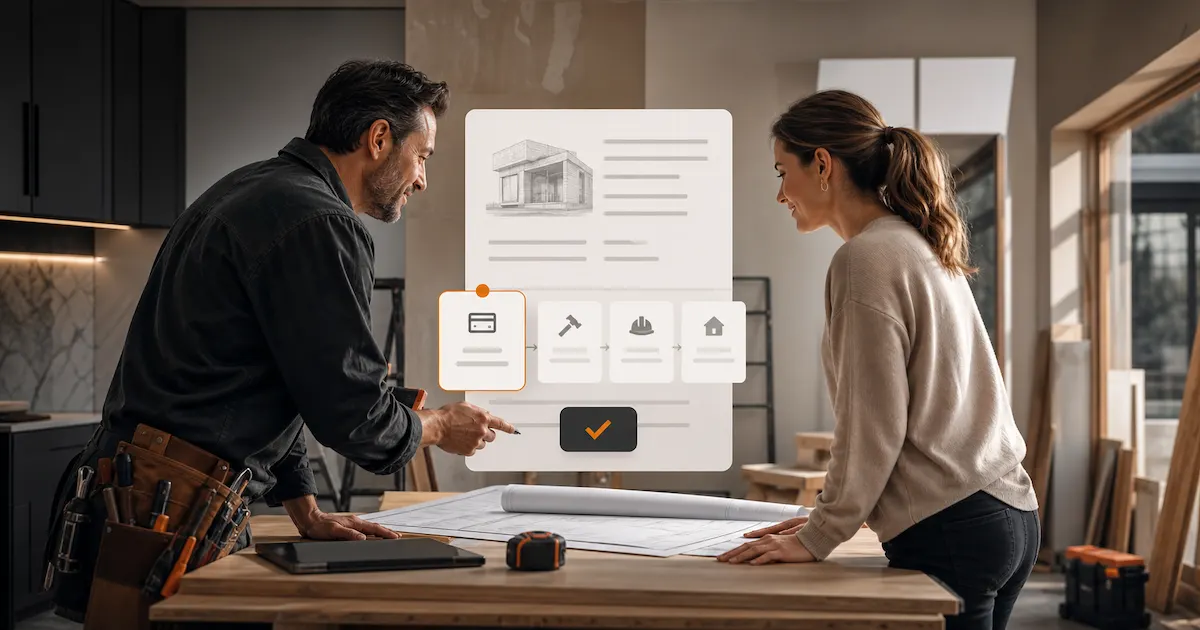
Asking for a deposit before starting a job is standard practice in the construction and remodeling industry. The problem isn't asking — it's how you ask. A wrong approach or a weak estimate can make the client see it as a red flag instead of normal business.
With the right framing, a deposit becomes a filter that protects you and signals professionalism to the client at the same time.
Why a Deposit Is Non-Negotiable in Construction
Before you pick up a single tool or order a piece of material, you've already invested real time: the site visit, measurements, the estimate, coordination. If the client cancels last minute, you lose all of that with no compensation.
A deposit serves three purposes:
It covers upfront material costs. On mid-size and larger jobs, materials can represent 40–60% of the total cost. Extending credit to yourself is a risk you shouldn't take.
It filters serious clients. A client who refuses any deposit is rarely a good client. Someone willing to put money down has actual intent to proceed.
It sets a professional tone from day one. Once a client pays even a portion upfront, there's a mutual commitment. The job has a real start.
How Much to Ask as a Deposit
There's no single legal rule — it depends on the job size and your market. Common ranges in the U.S. construction industry:
- Small jobs (under $3,000): 30–50% upfront, sometimes the full amount.
- Mid-size jobs ($3,000–$15,000): 30–40% upfront, remainder in milestones.
- Large jobs (over $15,000): 20–30% upfront, progress payments tied to completion stages.
The structure clients most easily accept: 30% deposit + 60% in phases + 10% at completion.
Some states have laws limiting how large a deposit a contractor can collect upfront (California caps it at 10% or $1,000, whichever is less, for licensed contractors on home improvement jobs). Check your state's contractor licensing law.
When to Bring It Up
Don't mention the deposit at the end of a site visit or as an afterthought when closing verbally. The right moment is inside the estimate itself, as a standard payment condition:
"Payment terms: 30% deposit upon contract signing to begin work, 50% at the midpoint of the project, and 20% upon final walkthrough and completion."
When the deposit appears as part of your official document, it doesn't sound like a personal request — it's simply how you operate.
How to Word It in an Email
If the client already has the estimate and you're confirming the start:
Subject: Project Confirmation — [Job Name] / [Client Name]
Hi [Name],
Thanks for letting me know you'd like to move forward. I'm glad to get started.
To lock in your start date and place the material orders, I need to receive the deposit we discussed: $[amount], which is 30% of the total project cost.
You can pay by:
- Check made out to [Your Business Name]
- Zelle / Venmo / bank transfer to [details]
- Credit card via the link in your estimate
Once I receive the deposit, I'll send you a receipt and confirm your exact start date.
Let me know if you have any questions.
[Your Name] [Your Company] · [Phone]
This email is direct, doesn't apologize for charging, and gives the client clear next steps.
Handling Objections
"I'd rather pay everything at the end."
"I understand that's your preference. However, the job requires purchasing materials upfront, and I'm not in a position to finance that. The deposit lets me order materials and hold your start date — without it, I can't guarantee availability."
Don't negotiate the deposit like it's optional. If the client won't agree to any deposit, that's useful information about what working with them will be like.
"Don't you trust me?"
"Of course — and I want everything to be clear from the start. The deposit isn't about trust, it's how I work with every client so we both start on the same page."
"Give me a discount if I pay everything now."
If the discount fits your margin, take it. If not: "I don't have room to discount on this one, but I'm happy to keep the payment plan flexible as we agreed."
The Deposit Receipt: What You Need to Document
When the client pays the deposit, issue a proper receipt or invoice — not just a text confirmation. This document should include:
- Your business name, license number, and contact info.
- The client's name and project address.
- The total contract amount.
- The deposit amount and date received.
- What the remaining balance is and when it's due.
In Presupix, you can generate the deposit invoice directly from the estimate with one click, linked to the same project. No need to create separate documents.
How Presupix Handles Deposits
When you send an estimate through Presupix, you can set the deposit requirement directly in the document. The client sees it as a payment condition before signing. Once they sign, you generate the deposit invoice from the same project — it automatically deducts from the final invoice when the job is done.
A deposit isn't a barrier to closing — it's the first step of a well-run job. Asking for it with confidence, at the right moment, and with clear instructions is what separates contractors who get paid from those who are always chasing money.
Frequently asked questions
How much deposit should I ask for on a construction job?
Common ranges are 30–50% upfront for small jobs under $3,000, 30–40% upfront for mid-size jobs between $3,000 and $15,000, and 20–30% upfront for larger jobs over $15,000, with the rest tied to milestones.
When is the best time to bring up the deposit?
Inside the estimate itself, as a standard payment condition, rather than at the end of a site visit or as an afterthought when closing verbally. That way it reads as how you operate, not a personal request.
What should I say if the client wants to pay everything at the end?
Explain that the job requires purchasing materials upfront and you're not in a position to finance that: the deposit lets you order materials and hold the start date, and without it you can't guarantee availability.
Do I need to issue a receipt for the deposit?
Yes. Issue a proper receipt or invoice — not just a text confirmation — including your business name, license number, the client's project address, the total contract amount, the deposit amount and date, and the remaining balance.