Presupuestos
How to Write an Electrical Installation Estimate (2026)
Step-by-step guide for electricians: how to estimate electrical work, price per outlet and light fixture, handle sales tax, and send a professional PDF estimate.
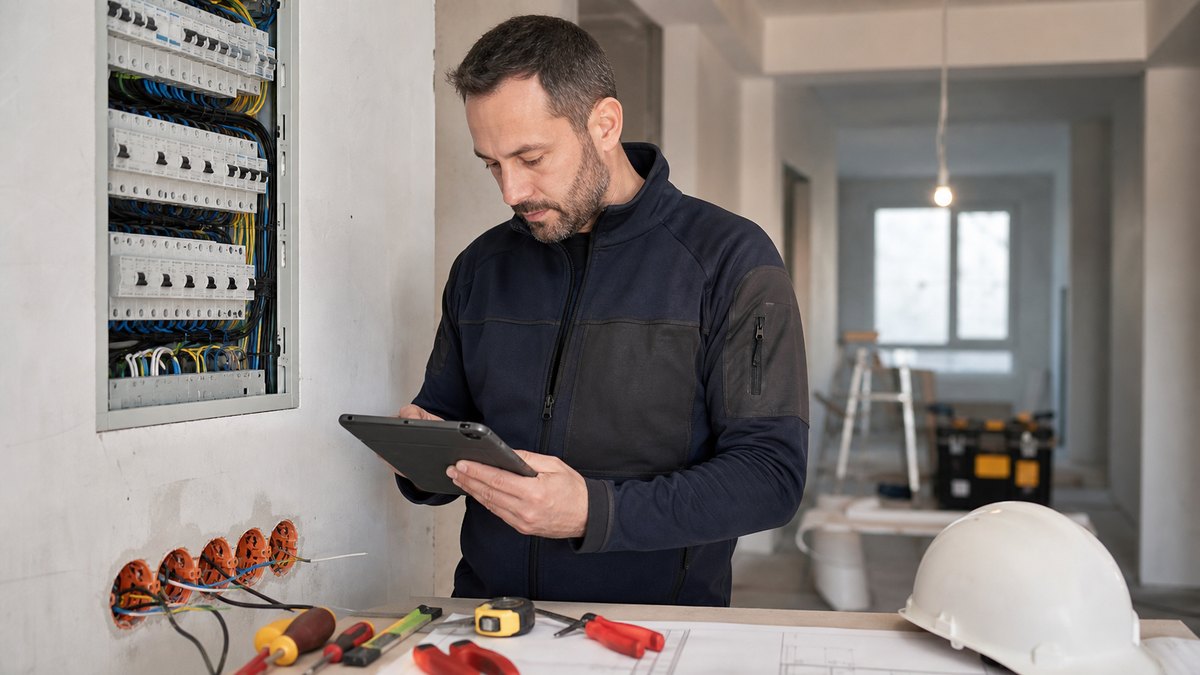
A clear electrical estimate does two things: it wins the job and it protects you if the scope changes. Clients who receive a vague "electrical work — $1,200" quote will compare you on price alone. Clients who see a detailed breakdown — each outlet, each circuit, the panel work, the permit — understand what they're paying for. This guide shows you how to build that estimate from scratch.
How to do an electrical takeoff
A takeoff is simply the process of counting every device, circuit, and foot of wire the job requires. Do this on-site — never from a description over the phone.
What to count and measure
- Number of outlets (standard, GFCI, AFCI, USB, 240V)
- Number of switches (single pole, 3-way, dimmer)
- Number of light fixtures (recessed, ceiling fan, pendant)
- Circuits needed and their amperage (15A, 20A, 30A, 50A)
- Wire run lengths from panel to first device on each circuit
- Panel location and available breaker slots
- Wall material (drywall, plaster, concrete, tile — affects labor time significantly)
- Attic/basement access for wire routing
Wire gauge by circuit type
| Circuit use | Amperage | Wire gauge (NM/Romex) |
|---|---|---|
| General lighting | 15A | 14 AWG |
| General outlets, kitchen small appliances | 20A | 12 AWG |
| Dryer | 30A | 10 AWG |
| Range/oven | 40–50A | 8–6 AWG |
| EV charger (Level 2) | 50A | 6 AWG |
| Hot tub / pool | 60A | 4 AWG |
Line items every electrical estimate needs
1. Outlets and receptacles
- Standard duplex outlet (15A or 20A)
- GFCI outlet (required in bathrooms, kitchens, garages, outdoors)
- AFCI outlet or breaker (required in bedrooms in most states)
- 240V outlet (dryer, range, EV charger)
2. Switches and dimmers
- Single-pole switch
- 3-way switch (for stairways, hallways with two entry points)
- Smart/dimmer switch
3. Fixtures and fans
- Recessed can light (6" or 4")
- Ceiling fan with light
- Pendant or chandelier (specify if heavy fixture requiring blocking)
- Exterior light
4. Panel work
- New circuit breaker installation
- Panel upgrade (100A to 200A)
- Subpanel installation
5. Rough-in work
- Wire run per foot (by gauge)
- Junction boxes
- Conduit in exposed locations (garage, basement, commercial)
6. Permit and inspection
- Electrical permit fee (varies by municipality)
- Inspection fee if separate
- Your time for permit application and inspection attendance
Electrical pricing per unit in the US (2026)
| Work item | Low | Mid | High | Notes |
|---|---|---|---|---|
| Standard outlet (new location) | $100 | $200 | $350 | More if wire run is long |
| GFCI outlet | $130 | $230 | $400 | Required near water |
| 240V outlet (dryer/range) | $250 | $400 | $700 | New circuit required |
| Single-pole switch | $80 | $150 | $250 | |
| Dimmer switch | $100 | $175 | $300 | Smart dimmer adds cost |
| Recessed light (new location) | $100 | $200 | $350 | IC-rated near insulation |
| Ceiling fan install (existing box) | $75 | $150 | $250 | Add $50–$100 for fan-rated box |
| New circuit (panel to device) | $300 | $600 | $1,200 | Depends on distance |
| Panel upgrade 100A to 200A | $1,500 | $2,500 | $4,500 | Includes utility coordination |
| Electrician hourly rate | $50/hr | $85/hr | $130/hr | Licensed journeyman/master |
Prices vary by region. California, New York, and Washington run significantly higher. Rural markets may be 20–30% lower.
Materials and wire calculation
Wire cost by gauge (per foot, NM-B cable)
| Wire type | Cost per foot (2026) |
|---|---|
| 14/2 NM-B (15A circuits) | $0.35–$0.60 |
| 12/2 NM-B (20A circuits) | $0.55–$0.90 |
| 10/2 NM-B (30A dryer) | $1.00–$1.50 |
| 10/3 NM-B (30A 4-wire) | $1.40–$2.00 |
| 6/2 or 6/3 NM-B (large appliances) | $2.50–$4.00 |
Wire run estimation tip
Always add 25–30% to your measured run length for slack at boxes, routing around obstacles, and drops to the panel. A 40-foot measured run should be quoted as 52–55 feet of wire. Running short on a job is expensive and embarrassing.
Device and box costs
Factor in boxes, wire nuts, staples, cable clamps, and breakers as a separate "small materials" line item. A rough guide: add $15–$35 per device location for miscellaneous hardware, plus the cost of the device itself.
Panel and service upgrades
Panel work is where estimates get complicated — and where underpricing is most dangerous. Always include:
- The panel itself (cost by amperage and brand)
- All breakers being installed
- Any new service entrance cable
- Utility coordination time (scheduling the meter pull if required)
- Permit and inspection fees
- Possibility of drywall repair after panel rough-in — note whether this is included or the homeowner's responsibility
Panel upgrades typically require a permit and inspection in every state. Build the permit fee into your estimate and call your local building department before finalizing the price — fees range from $75 to $500+ depending on the municipality.
Permits and inspections
Most electrical work beyond simple device replacements requires a permit. This isn't optional — unpermitted electrical work can void homeowner's insurance and cause problems at resale.
Include the permit fee as a pass-through line item in your estimate. Your time for pulling the permit and attending the inspection is part of the job — either include it in your labor total or add a separate administrative line.
If a client asks you to skip the permit to save money, decline. The liability if something goes wrong falls on you as the licensed contractor.
Sales tax rules for electricians by state
Electrical contractors are subject to different tax treatment than retailers. The key distinction: do you pay tax when you buy materials, or does the customer pay tax on the finished job?
| State | Tax on labor? | Tax on materials? | Notes |
|---|---|---|---|
| Texas | No (if separately stated) | Yes | Materials taxable; labor exempt if itemized |
| Florida | No | Yes | Contractor pays use tax on materials consumed |
| California | No | Yes (use tax) | Contractor pays tax on materials; not charged to customer separately |
| Illinois | No | Yes | Materials included in lump-sum contracts taxable |
| New York | Yes | Yes | Most electrical services fully taxable |
Sales tax rules vary by state, local rules, and job type. Confirm the correct treatment for your business.
Full example: Electrical estimate for a kitchen remodel
Scope: new kitchen circuit for island (20A), 4 GFCI outlets, 6 recessed lights with dimmer, under-cabinet lighting circuit, panel work (2 new breakers). Florida location (contractor pays use tax on materials, no sales tax charged to customer on labor).
| Line Item | Qty | Unit | Unit Price | Total |
|---|---|---|---|---|
| New 20A circuit — kitchen island (panel to device, 35 ft run) | 1 | circuit | $450.00 | $450.00 |
| GFCI outlet — countertop locations | 4 | ea | $185.00 | $740.00 |
| 6" LED recessed light — new location (IC-rated) | 6 | ea | $175.00 | $1,050.00 |
| Dimmer switch for recessed circuit | 1 | ea | $165.00 | $165.00 |
| Under-cabinet lighting circuit — new 15A circuit | 1 | circuit | $380.00 | $380.00 |
| Panel: 2 new breakers (15A + 20A) | 2 | ea | $95.00 | $190.00 |
| Electrical permit (Miami-Dade County) | 1 | lot | $185.00 | $185.00 |
| Drywall patching after rough-in | Not included — owner's responsibility | — | ||
| TOTAL | $3,160.00 | |||
| Materials included in prices above. Contractor handles sales/use tax on materials per Florida law. No additional tax charged to customer on labor. |
Payment terms
50% deposit at start · 50% at completion and final inspection · Estimate valid 21 days
Common electrical estimating mistakes
1. Not measuring wire runs
Estimating wire by gut feel instead of measuring leads to either running short on the job or wildly overbuying. Measure the actual route the wire will take — not the straight-line distance.
2. Forgetting attic and crawlspace access time
A 15-minute wire run becomes a 2-hour job when you're pulling cable through a hot attic in August. Price the access, not just the wire.
3. Not specifying drywall repair
Who patches the walls after rough-in? If it's not in your estimate, the homeowner will assume you're doing it. Add a line item either including or explicitly excluding drywall repair.
4. Permit fee surprise
Permit fees that come in higher than expected after you've already quoted the job eat your margin. Call the building department before submitting the estimate to confirm current fees.
5. Flat price without device breakdown
If you quote "electrical work — $3,200" and the client wants to add two outlets after the fact, you have no baseline to price the change order. Item-by-item pricing makes change orders easy and defensible.
Frequently asked questions
How much does it cost to install an outlet?
Installing a new outlet in an existing home costs $150–$350 on average in 2026, including labor and materials. Cost increases significantly if new wiring must be run from the panel, or if walls are concrete, tile, or plaster.
How do electricians charge for estimates?
Most residential electricians offer free estimates for standard jobs. Commercial projects may charge a site visit fee of $75–$150. Always provide a flat price per unit rather than hourly estimates when possible — clients strongly prefer knowing the total.
What should an electrical estimate include?
Each circuit or device being installed, wire gauge and estimated length, panel work if needed, permit fees, labor costs (per point or per job), materials with markup, and your applicable sales tax treatment after confirming local rules.
Do I need a permit for electrical work?
In most jurisdictions, yes — for any work beyond simple device replacements. New circuits, panel work, and service upgrades almost always require a permit and inspection. Building without a permit exposes both you and the homeowner to liability.
How long does an electrical estimate take?
A thorough site visit and takeoff for a residential job typically takes 30–60 minutes. Building the formal estimate from your notes takes another 20–30 minutes. Using estimating software cuts the second part to under 10 minutes.